
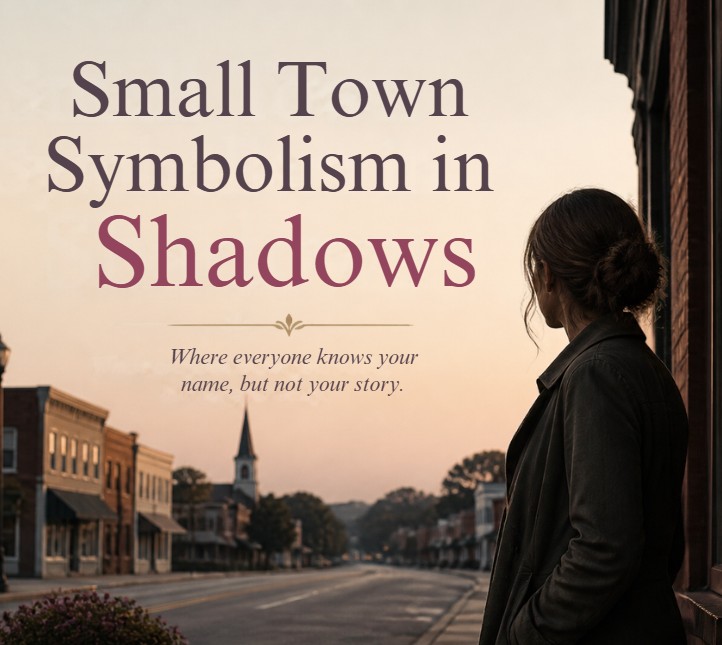
Small Town Symbolism in Shadows
There’s an old saying that has been rattling around in my head lately: The brighter the light, the darker the shadow. It seems especially fitting as I write Shadows of Blue Ridge, because I’m discovering that light and shadow are becoming almost like characters themselves.
Laura Glover comes to Blue Ridge hoping to step away from what’s happening in Philadelphia. She wants some breathing room, a little anonymity, and the comfort of a place she already knows.
There’s just one problem with trying to disappear in a small town. People notice you. They notice when you arrive. They remember your family. They know who you were in high school, who you dated, and probably something embarrassing you did twenty years ago that you’ve successfully forgotten. That can feel wonderfully safe. It can also feel a little unsettling when you already have reason to wonder if someone is watching you. That’s where the shadows have become interesting to me.
We naturally think of light as safe and shadows as threatening. But what if they aren’t? Light exposes you. It makes you visible. Shadows can conceal danger, but they can also provide shelter. And someone watching from the shadows might be a threat—or they might be quietly looking out for you.
Even the Blue Ridge Mountains seem to play along. One moment they’re brilliantly clear; the next they disappear behind mist. Main Street can feel warm and familiar in the afternoon and mysterious after the storefront lights go out.
As the story develops, I’m having fun playing with that uncertainty—and letting Laura decide what she thinks she sees. Because perhaps that’s the real danger of shadows. Sometimes we see exactly what’s there.
And sometimes we see what we’re already afraid is there. 😉